

Remote or wall switch
Five channels, each one a shade or a group of shades. One press to a saved favorite position, up, down, or stop anywhere in between.
Motorized Window Treatments
Norman® Smart Motorization on honeycomb, roller, Roman, sheer, and SmartDrape™ shades. PerfectTilt™ G4 on shutters. AutoWand™ when you want a motor without a remote. Measured, installed, and paired to your phone by PAPABLINDS across the Greater Seattle Area.
Start with the product you already have in mind. The control and power options are the same across all three.
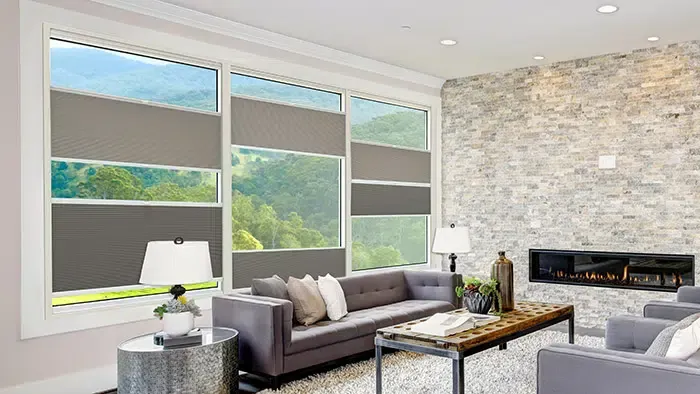 © 2021 Norman®. All Rights Reserved.
Portrait™ honeycomb, Soluna™ roller and solar, Centerpiece™ Roman, PerfectSheer™, SmartFold™, and SmartDrape™. Lift, tilt, or traverse from a remote, the app, or your voice.
See the options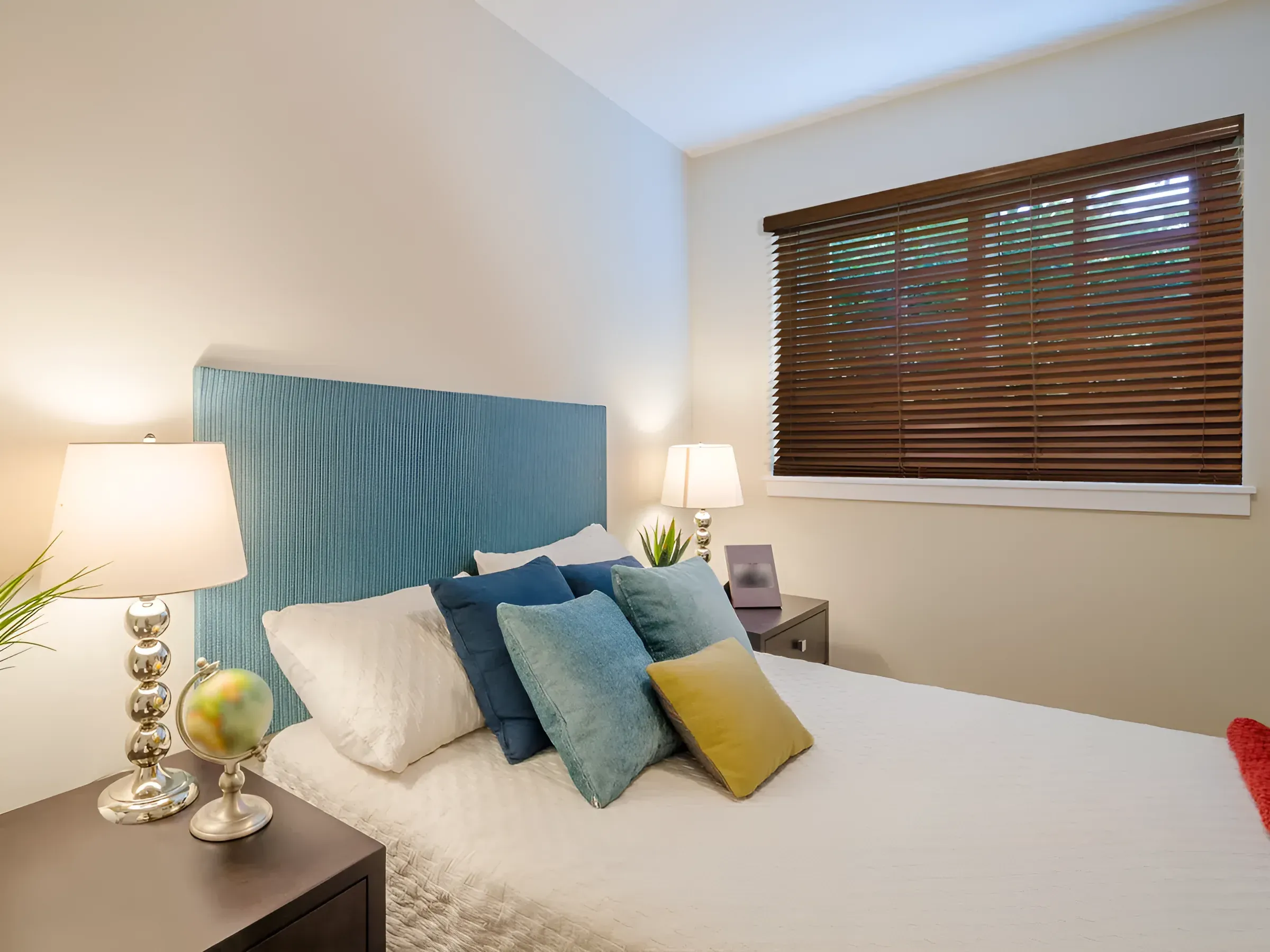 © 2021 Norman®. All Rights Reserved.
Norman® blind lines come cordless or with a wand, not with a motor. What we install when someone asks for motorized blinds, and why the look does not have to change.
See the options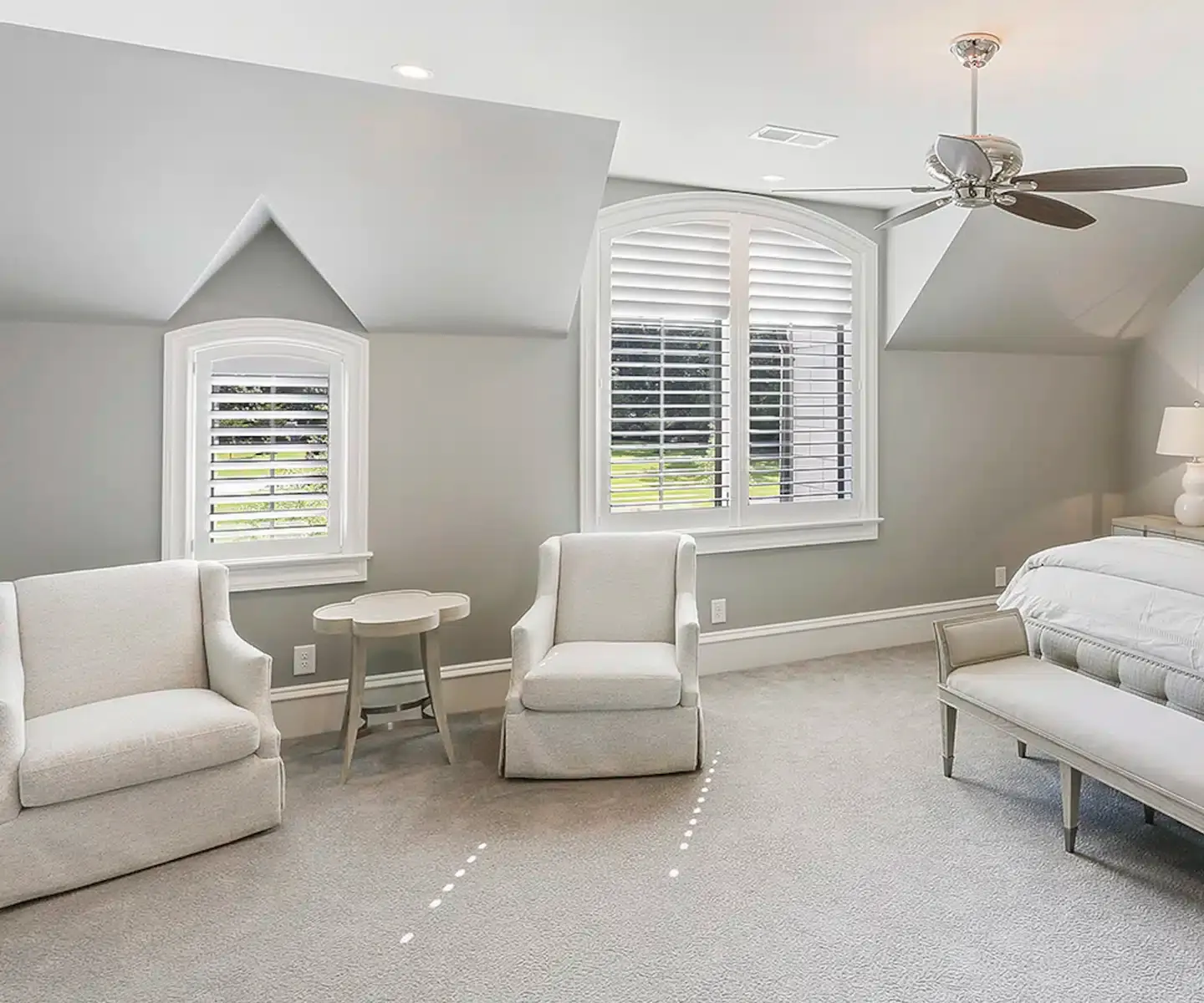 © 2021 Norman®. All Rights Reserved.
PerfectTilt™ G4 tilts the louvers of Woodlore® Plus and Normandy® shutters from a remote or the app, with schedules and a security mode.
See the optionsEvery motorized product we install runs on one of these. The choice usually comes down to whether you want a remote and an app, or just a button on the shade.
| System | What it moves | Control | Power |
|---|---|---|---|
| Norman® Smart Motorization | Lift on honeycomb, roller, Roman, and SmartFold™ shades; vane tilt and lift on PerfectSheer™; traverse on SmartDrape™ | Five-channel remote or wall switch; ShadeAuto™ hub and app; Siri, Alexa, and Google Assistant | Rechargeable battery with a wireless charging wand, an AC adapter, or low-voltage hardwire |
| AutoWand™ | Lift on roller, honeycomb, Roman, sheer, and SmartFold™ shades | Three buttons on the wand pendant. No remote, no app | Built-in rechargeable lithium-ion battery, charged through micro-USB on the pendant |
| PerfectTilt™ G4 | Louver tilt on Woodlore® Plus and Normandy® shutters | Remote and the Norman® app; schedules and a security mode | Rechargeable lithium-ion battery with an integrated solar panel |
Norman® wood, faux wood, vertical, and aluminum blinds are not offered with any of the three. See motorized blinds for what we install instead.
Pick one, or combine them: a remote on the nightstand and the app on your phone run the same shades.
Five channels, each one a shade or a group of shades. One press to a saved favorite position, up, down, or stop anywhere in between.
The ShadeAuto™ hub connects to your router by Wi-Fi or Ethernet. The app runs daily or weekly routines and adds Siri, Alexa, and Google Assistant.
A slim pendant with three buttons hangs where a wand would. Motorized lift with nothing to pair and nothing to lose in the couch cushions.
No electrician on most jobs. The power option is decided per window at the visit, because it changes where the shade can go and how it is charged.
The battery lives in the headrail. Recharge it with the wireless charging wand; an optional extension pole reaches windows up to 11 feet high. A dual power meter shows the charge in the motor and in the wand.
A plug-in adapter for shades near an outlet, so there is nothing to recharge. Also available as a charger for the battery version.
DC low-voltage wiring for new construction and remodels where the wall is open anyway. Planned with your electrician before drywall.
Clerestory rows in a two-story great room, stairwell windows, transoms over a slider. The most common reason our customers motorize.
A wall of west-facing glass is three to six shades. One channel on the remote moves them together at 3 p.m.
The sun is up before 5:30 a.m. through June. A schedule lowers the bedroom shades at dusk and raises them at the alarm, not at sunrise.
A sofa against the window, a freestanding tub, a kitchen sink. The shade moves; you do not.
Motorization adds four questions to a normal measure. We bring a working sample so you can hear the motor and try the remote.
Usually not. Most motorized shades run on a rechargeable battery in the headrail, charged with a wand. An electrician is only involved if you choose low-voltage hardwire during a remodel.
It depends on the size of the shade and how often it moves, but most go months between charges. You charge each shade where it hangs with the charging wand, so nothing has to come down, and the power meter shows which shade needs it.
Yes. Shades saved to one remote channel move together, so a whole wall of glass opens or closes with one button. Channels and groups are set up on installation day, and you can change them later in the app or on the remote.
Yes, through the ShadeAuto™ hub and app: Amazon Alexa, Google Assistant, and Siri through Apple HomeKit. The hub connects to your router by Wi-Fi or Ethernet.
Not with a Norman® kit; motorization is ordered with the product. Tell us what you have at the visit and we will say what the options are.
No. Norman® describes the motor as ultra quiet, and in a bedroom it is quieter than the heat coming on. You will hear it at the visit before you order.
No. The remote talks to each shade directly, so raising and lowering work without Wi-Fi. A hub connected to your router is needed only for the app, schedules and voice control.
Motorized shades and shutters can be operated at the touch of a button, on a schedule, or via voice commands - meaning that hard-to-reach windows, or those you always forget to adjust, finally work to enhance your comfort. For many homeowners, motorized window treatments in Seattle solve three local problems at once: summer sunrises that come hours before you wake up, low west sun over Lake Washington, and two-story great rooms with a row of glass nobody can touch. This guide explains which windows deserve a motor, how control and power work, and what a professional installation includes.
Seattle light changes more across the year, than most people expect, and a motor lets your coverings keep up without daily effort.
In June the sun rises very early, so bedroom shades on a schedule can stay down until your alarm instead of opening at dawn. In the afternoon, west-facing view windows from Kirkland to Renton catch hard glare off the lake, and a routine can lower solar shades at 3 p.m. before the TV and the sofa heat up. In December, houses situated beneath tall fir trees receive little daylight, so the morning routine involves raising all the shades at once - to ensure not a drop of light is missed. This is where automated window treatments pay off: the schedule does the work, not you.
You rarely need to motorize the whole house. A motor makes sense where reaching the window is hard, frequent, or awkward:
The remaining shades can be left without motorized drives while using the same fabric and color; this way, the motorized upper tier and the manually operated lower tier will still be perceived as a unified wall. This type of split arrangement is most commonly found in spacious living rooms with double-height ceilings - a feature common in homes built since the 1990s - as it allows for the most efficient use of the budget.
Almost every fabric shade can carry a motor: honeycomb, roller and solar, Roman, layered sheer, and fabric vanes for sliding doors. Depending on the style, the motor lifts the shade, tilts the vanes, or draws them along the track, and you can still walk through door vanes by hand. Top-down bottom-up honeycomb shades use two motors, one per rail.
Shutters are motorized with PerfectTilt G4, which tilts the louvers of Woodlore Plus and Normandy panels while the frame and louver size stay the same. The motor runs on a rechargeable battery, with solar charging on some configurations, so nothing is wired into the wall.
One point buyers rarely hear elsewhere: Norman wood, faux wood, vertical, and aluminum blinds are cordless or wand-operated, not motorized. If you want the slat look with a motor, a motorized shutter or a layered sheer shade with tilting vanes is the closer match. Motorization is also ordered with a new product rather than added to old blinds, which is why it is planned at the measure.
Control is where smart window treatments earn their name, and you can combine every option. Motorized shutters use their own remote and the Norman app, with schedules and a security mode. that moves the louvers while you travel. Also you have support for Alexa, Google Assistant, and Siri (via Apple HomeKit).
Most homes need no electrician. Power is chosen window by window, because it affects where the shade can go and how it is charged:
A battery charge lasts months, depending on the size of the shade and how often it moves, for a center-opening sliding-door shade, the manufacturer cites about seven months. A dual power meter shows the charge in both the motor and the wand, so you always know which shade needs attention. For glass higher than the pole can reach, power is planned at the visit: an adapter if an outlet is close, or hardwire during a remodel.
Professional motorized window treatment installation in Seattle through papablinds.com follows four steps. It starts with a home visit, where you compare fabrics in your own light, hear a working motor, and try the remote. Next, measurements are taken for each window and a custom power supply scheme is developed, for tall glass structures, the availability of a mains connection for charging is also checked.
On installation day, the shades go up, remote channels and groups are saved, and the hub joins your Wi-Fi. Even before the technician finishes the job, scenarios will be set up for morning and evening routines, as well as for sun protection on the west side of the house, you will also be shown how to use the app and remote control so that everything works from day one. Later on, you can modify any scenario or device group via the app or the remote control. If you are ready to plan motorized window coverings in Seattle , choosing our company will be a great decision.
Norman® product names, marks, and photos are used for product education. ™ and ® denote trademarks owned or claimed by Norman®. Norman-supplied photos: © 2021 Norman®. All Rights Reserved.