Composite shutters for Seattle homes: how to choose Woodlore panels
Composite plantation shutters are the most practical shutter for a Seattle home: they look like painted wood, hold their shape through wet winters, and never need repainting. If you are comparing options for composite shutters in Seattle , this guide explains what the material really is, how the two Woodlore lines differ, which custom details matter at each window, and what drives the final price.
What a composite shutter is, and what it is not
"Composite" is used loosely in the window covering trade. Some sellers apply the word to hollow vinyl, foam-filled PVC, or MDF wrapped in plastic. A true wood composite panel is different: the core is made of wood fibers bonded under heat and pressure, then sealed in a hard factory finish. In Norman's Woodlore line, the core is up to 95% wood, and a patented polypropylene coating resists chipping, peeling, and yellowing.
This construction is why wood composite shutters in Seattle homes outlast vinyl ones. The dense core does not warp from the heat on south-facing windows, the louvers remain straight, and the panel itself feels heavy and substantial when closed - much like a product made of natural wood. While hollow plastic shutters are cheaper to purchase, wide panels made from this material are prone to sagging, and the plastic itself can fade under direct sunlight.
Woodlore or Woodlore Plus: choosing the line
Most homeowners looking at Woodlore shutters in Seattle end up choosing between two Norman lines that share the same frames, hinges, and tilt systems.
- Woodlore: composite panels and louvers, five louver sizes from 1 7/8 to 4 1/2 inches, and six whites and soft neutrals, including Pure White, Silk White, and Sea Mist. It is the right choice for most windows with white or off-white trim.
- Woodlore Plus: the same composite frames with lighter engineered ABS louvers. That change allows panels up to 36 inches wide, 23 standard colors plus custom matching, DayNite blackout, PerfectTilt motorization, and Bi-fold 180 tracks for sliding doors.
If you want white, standard widths, and manual tilt, Woodlore covers it. If you need gray or black panels, a wide picture window, or tilt by remote control, look at the Woodlore Plus model for this room.
What "custom" means at each window
Custom composite shutters in Seattle are crafted to the specific measurements of your windows rather than selected from ready-made, standard options, their appearance and functionality are determined by four key decisions. The first factor is the louver size, wide louvers offer a clear view through large, modern windows. The second factor is the frame type. A Z-frame mounts over existing window trim, an L-frame is suitable for the shallow drywall window reveals common in new Eastside construction, and a direct-mount option is used where the opening depth is limited.
The third is tilt: hidden tilt keeps the louvers clean with no rod, and split tilt closes the bottom half for privacy while the top lets in daylight. Finally, the panel configuration (number of panels, hinge placement, and presence of dividing bars) is selected to ensure the panels do not strike handles, grips, or locks.
Where composite plantation shutters work best
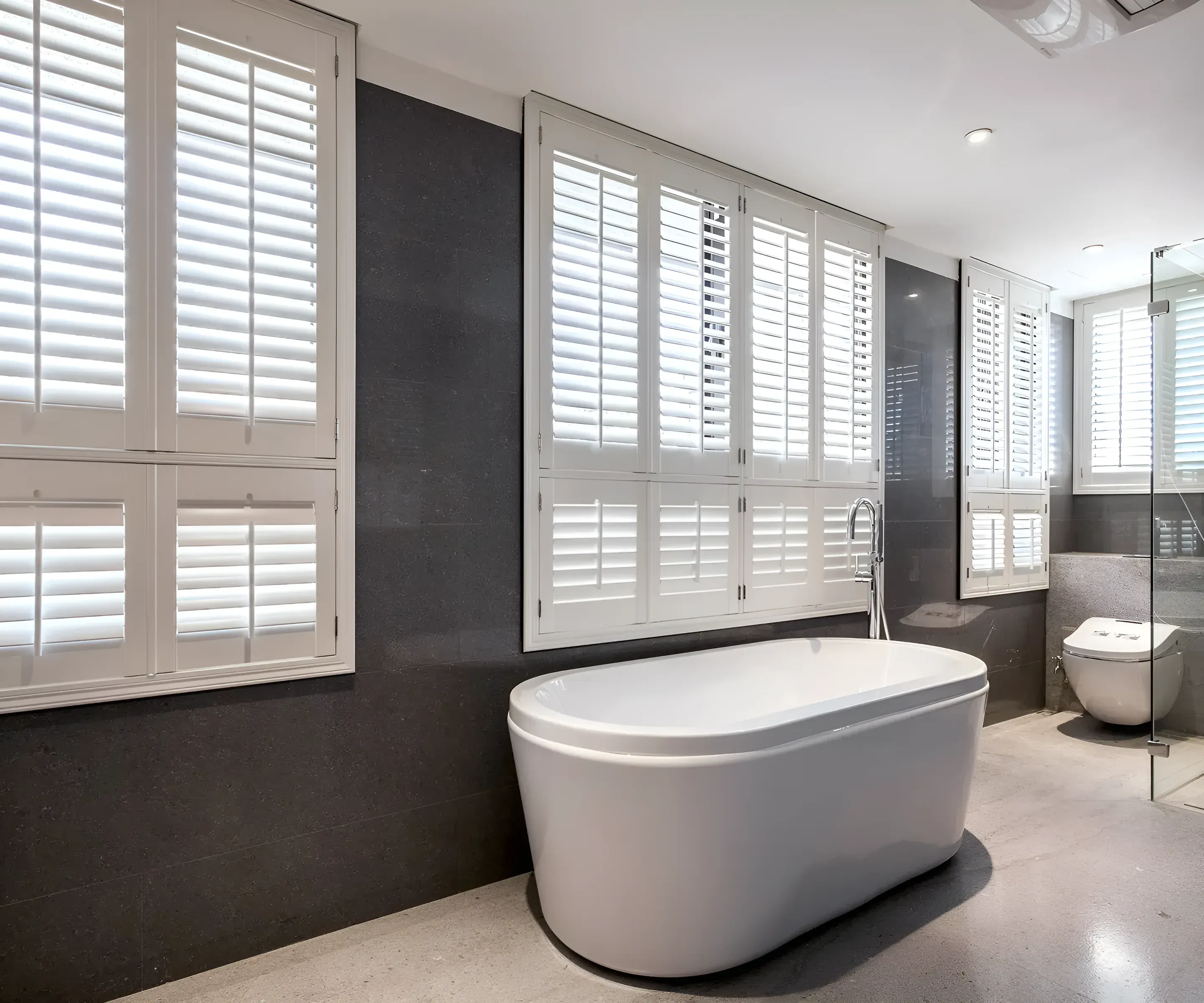
Composite plantation shutters in Seattle are a strong fit for living rooms, bedrooms, home offices, kitchens, and bathroom windows outside the shower spray. They are also suitable for patio doors and sliding glass doors. The sliding system panels are matched to the tone and style of the adjacent windows, creating a cohesive and harmonious look. Two points are worth noting: the window in the shower area requires panels that are completely water-resistant, and if you wish to preserve the visible wood grain beneath a tinted finish, it is best to opt for hardwoods.
Composite or hardwood?
Hardwood wins when the grain is part of the design: a stained panel next to oak floors or old-growth fir trim reads as furniture. In almost all other cases, composite materials come out on top. They are more cost-effective while maintaining the same window appearance, withstand humidity better, and retain the uniformity of their painted finish for years. Many homeowners opt for a combination: stained hardwood shutters in the dining room, and composite ones in the kitchen, bedrooms, and children's rooms - selecting matching slat sizes to ensure a harmonious look throughout the house.
Interior or exterior shutters?
People searching for exterior composite shutters in Seattle usually want one of two things. The first is decorative shutters fixed to the siding beside a window, a facade product installed together with exterior trim. The second is a finished look from the street, and interior plantation shutters already deliver it: a row of matching louvers reads as clean architecture from the sidewalk while giving you privacy inside. For curb appeal, interior composite panels do the job without facing rain, moss, and UV on the outside wall.
What determines the price
The total depends mostly on the number of windows and the size of each opening. After that come the line (Woodlore costs less than Woodlore Plus), louver size, frame style, and add-ons such as motorization, blackout, or a sliding-door track. Arches and bay windows add specialty frames. A written quote per window after measurement is the only reliable number, because two windows of the same width can need different frames. Ask for the quote room by room if you plan to phase the project.
The fastest way to decide is to hold Woodlore and Woodlore Plus samples against your trim in your own light. PAPABLINDS brings both lines to a free in-home visit, measures every window, and gives you a written price that includes installation. Request a visit on papablinds.com and name the rooms you want covered.


 © 2021 Norman®. All Rights Reserved.