

Long summer days, short winter ones
Sunrise before 5:30 a.m. through June, and dark at 4:30 p.m. in December. Bedrooms need blackout; everything else needs to let the winter light in.
Window Treatments by Room
A bedroom needs dark, a bathroom needs to survive steam, a kitchen needs to wipe clean, a living room needs the view without the glare, and a nursery needs no cords and a quiet nap. The right product follows from that. Five room guides, and a free in-home visit from PAPABLINDS across the Greater Seattle Area.
Each guide covers the problem the room sets, the products that solve it, and what we check at the visit.
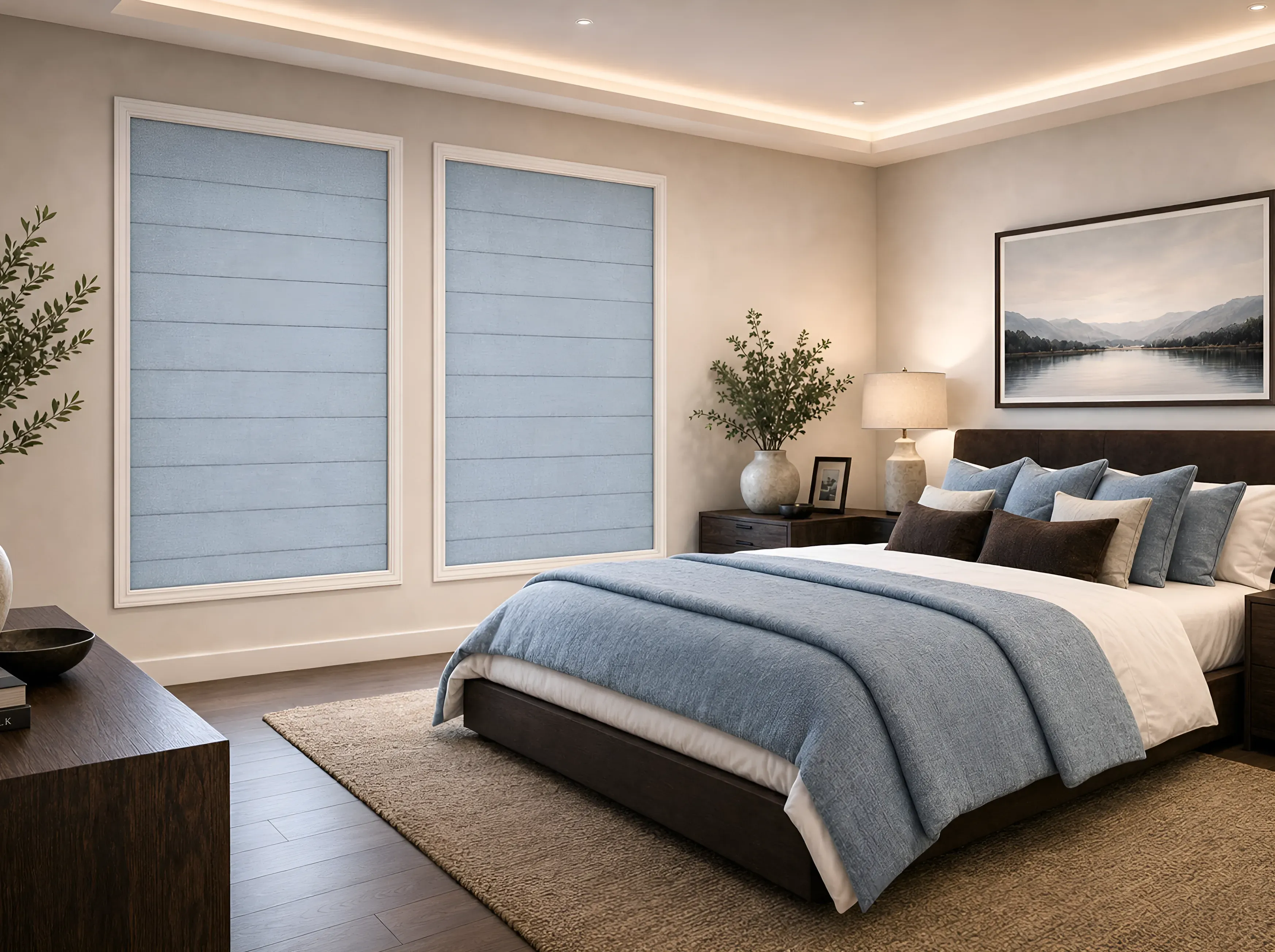 © Norman®. All Rights Reserved.
Dark at 5 a.m. in June and warm in January: blackout honeycomb, roller, and Roman shades, DayNite™ shutters, and schedules.
See the options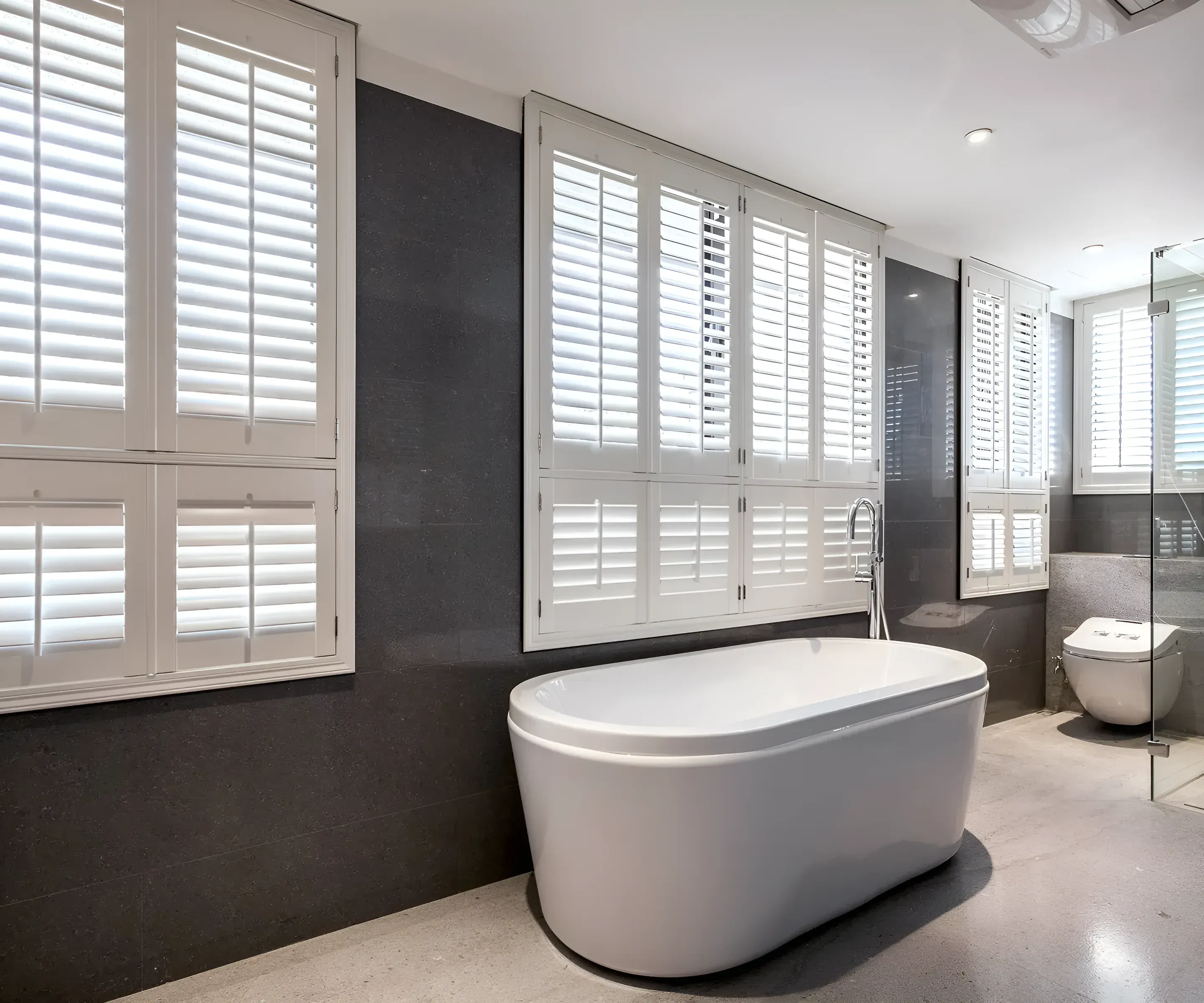 © 2021 Norman®. All Rights Reserved.
Privacy with daylight, and materials that shrug off steam: AquaShield™ shutters, faux wood and aluminum blinds, polyester honeycomb.
See the options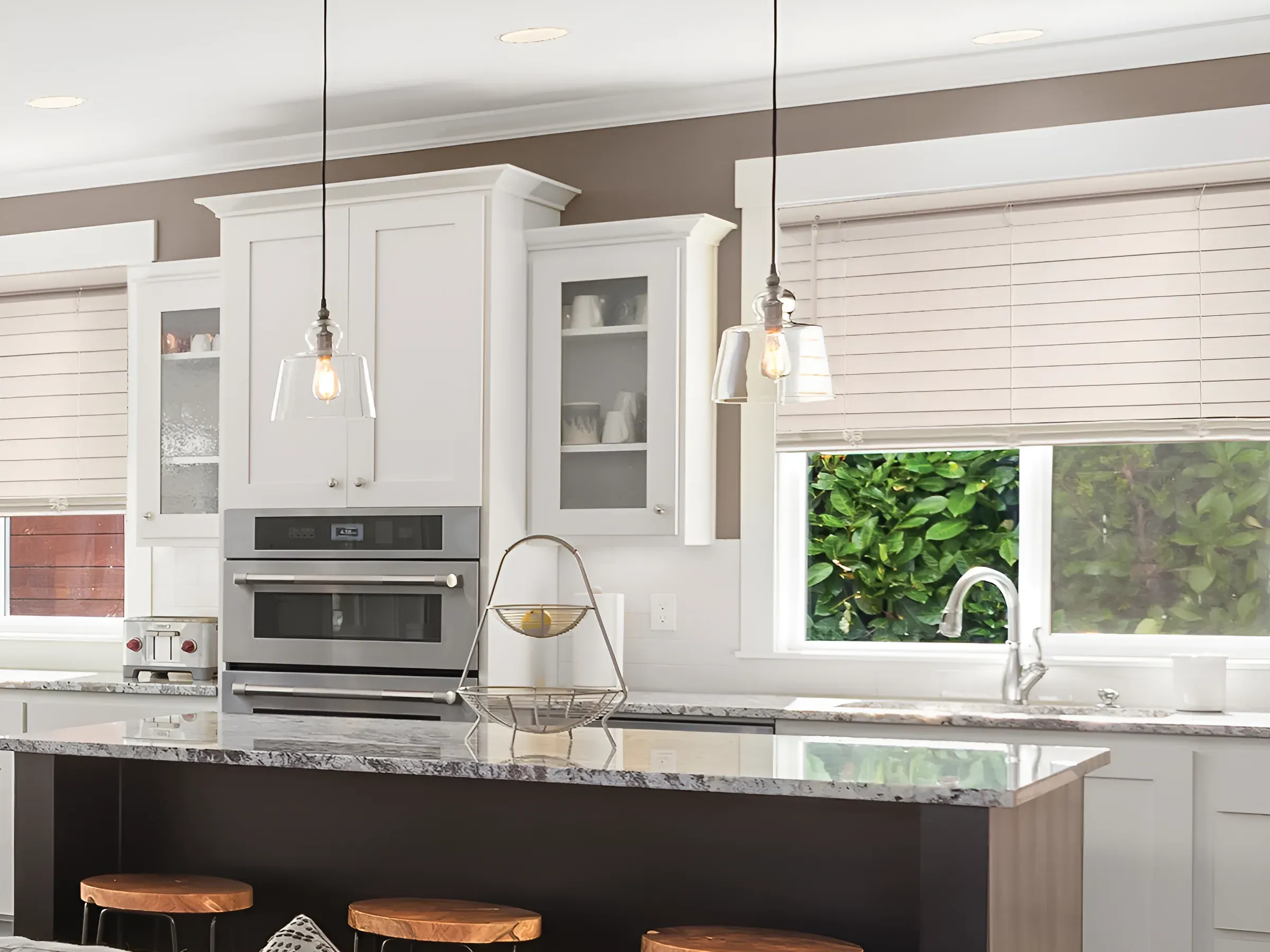 © Norman®. All Rights Reserved.
Grease, splashes, and the window over the sink: faux wood and aluminum blinds, wipeable roller fabrics, and motors for the window you cannot reach.
See the options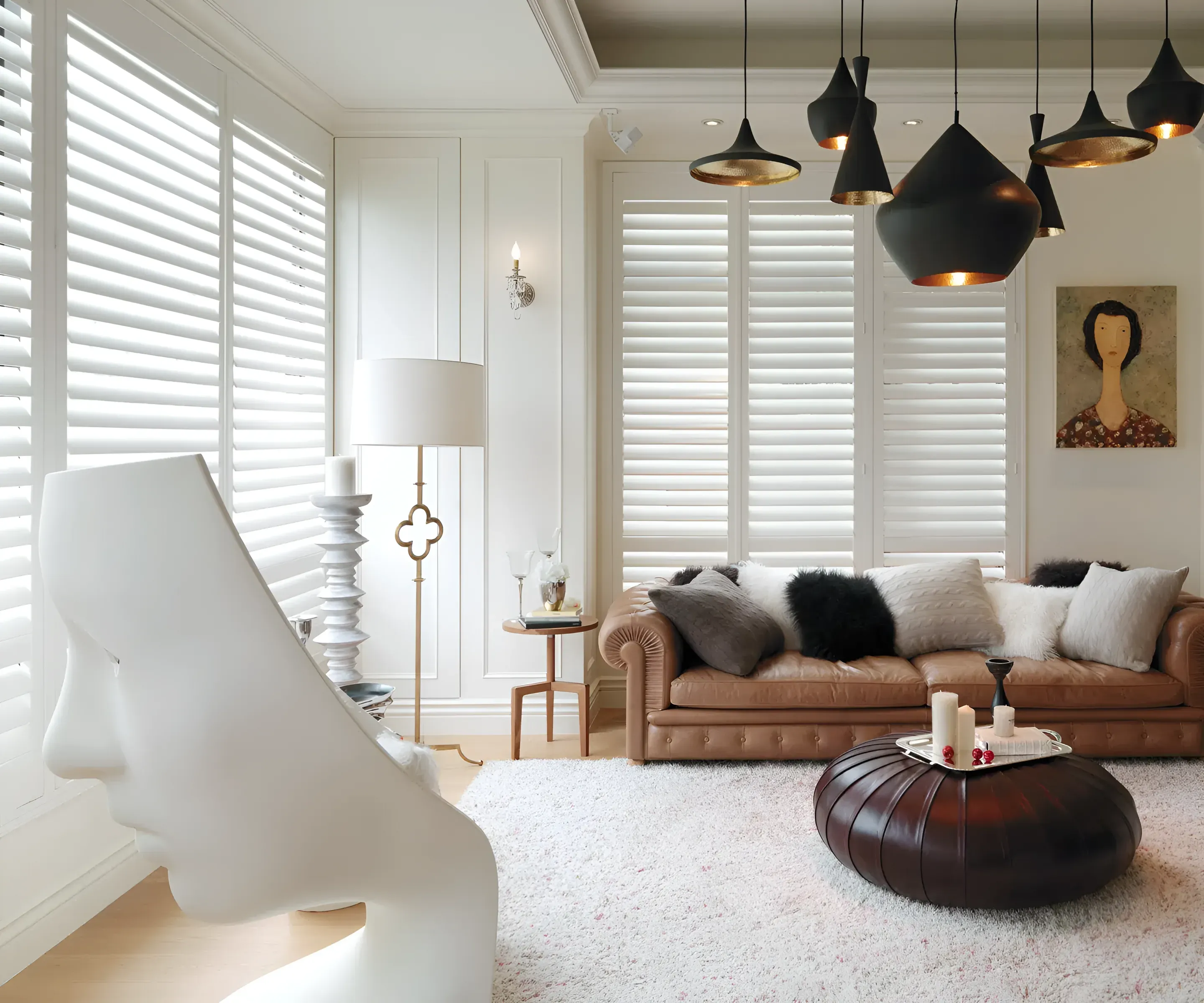 © 2021 Norman®. All Rights Reserved.
The view, the glare, and the biggest glass in the house: solar shades, sheer shades, shutters, and honeycomb for the winter.
See the options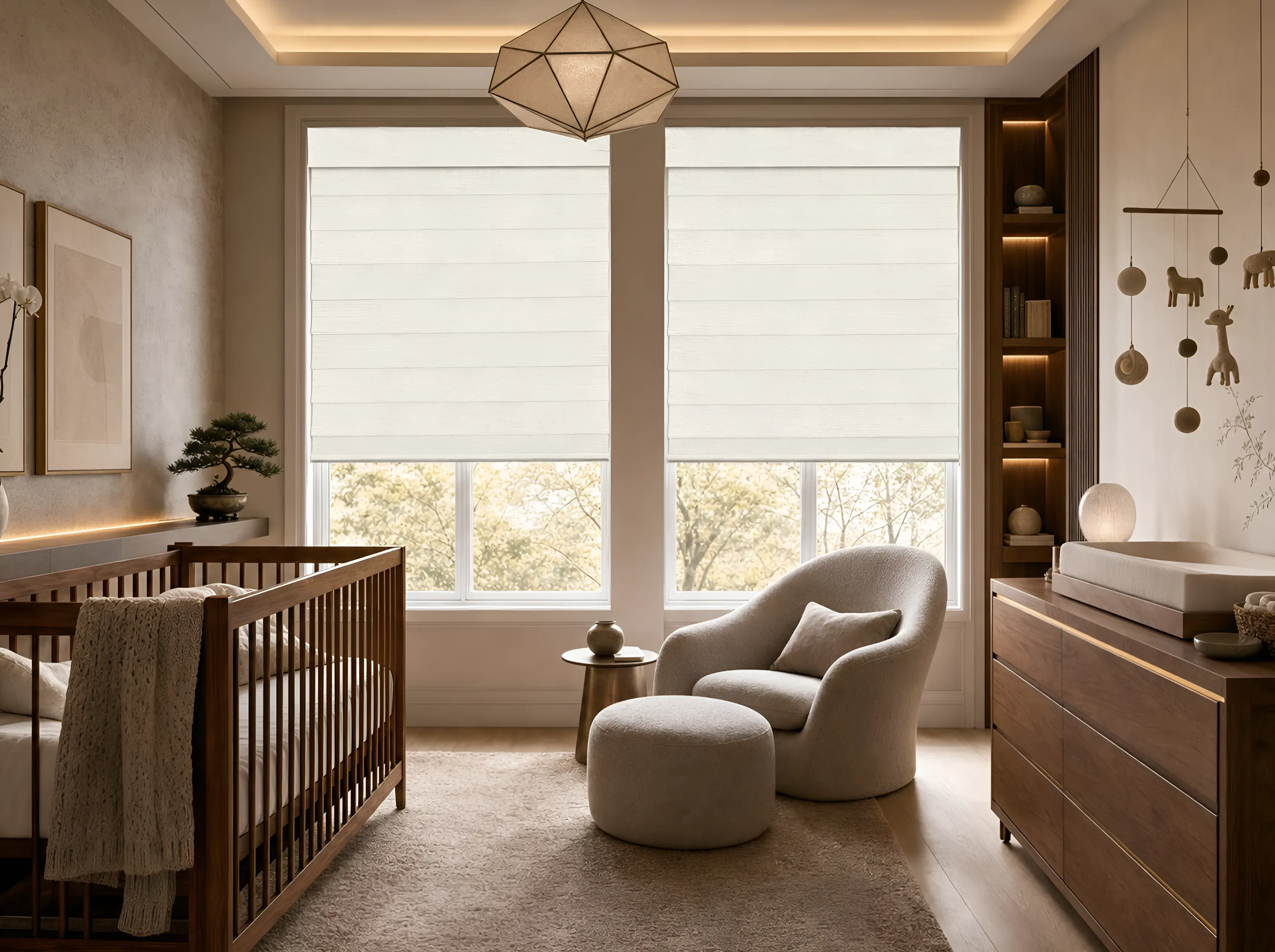 © Norman®. All Rights Reserved.
Blackout for naps, nothing to pull, quiet to operate: cordless room-darkening shades certified Best for Kids.
See the options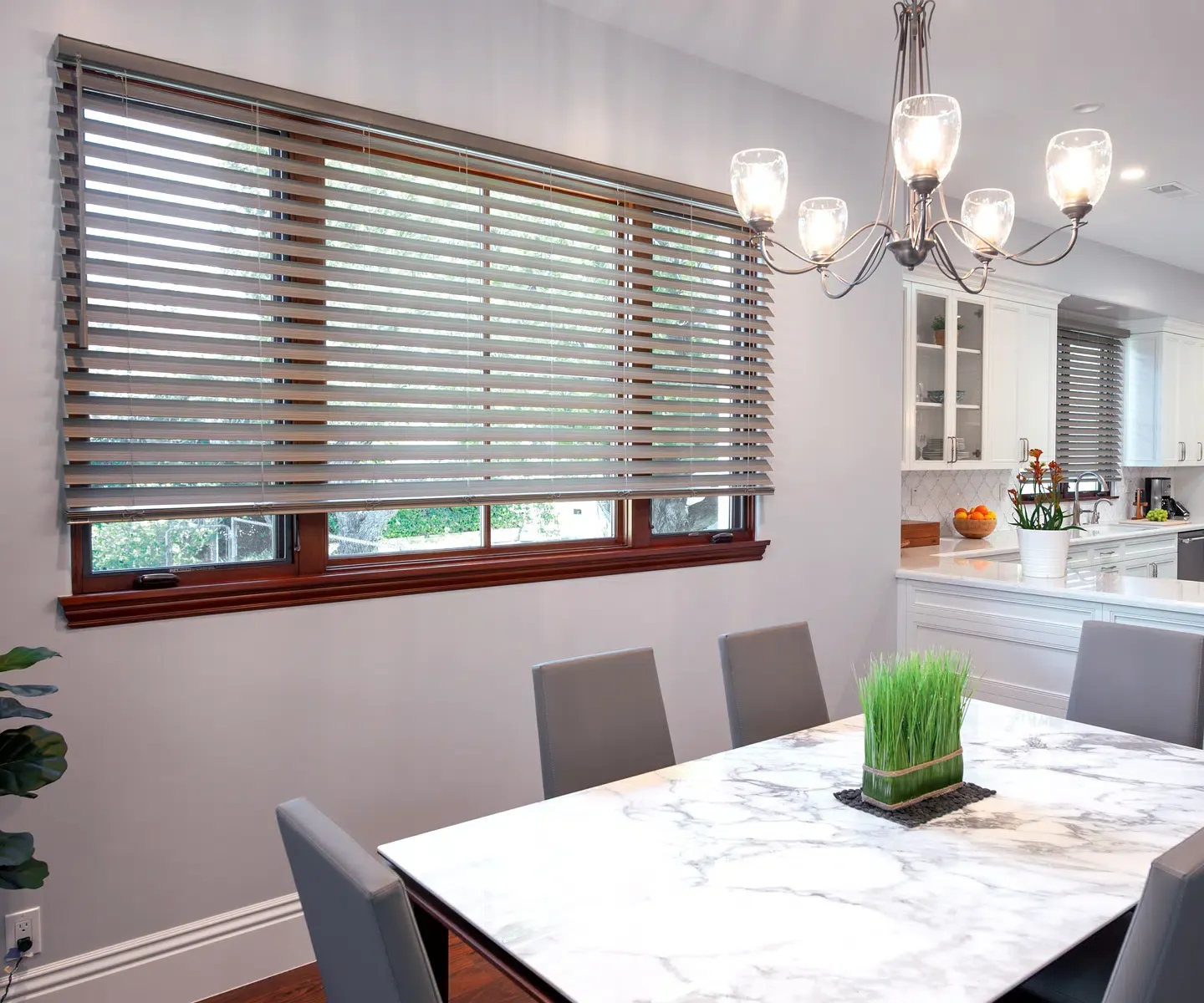 © 2021 Norman®. All Rights Reserved.
Dining rooms, offices, media rooms, laundry rooms: tell us the room and the problem and we bring the samples that fit.
See the optionsWhat we reach for first in each room, and why. The room guides explain the exceptions.
| Room | The job | First choice | Also good |
|---|---|---|---|
| Bedroom | Dark, quiet, warm | Room-darkening honeycomb with side channels | Blackout roller with LightGuard 360™, Roman with blackout lining, DayNite™ shutters |
| Bathroom | Privacy, steam | AquaShield™ waterproof shutters | Faux wood or aluminum blinds, polyester honeycomb top-down bottom-up |
| Kitchen | Wipe clean, reach | Ultimate™ faux wood blinds | CityLights™ aluminum, solar roller, Woodlore® Plus shutters, AutoWand™ over the sink |
| Living room | View, glare, heat loss | Solar or light-filtering roller shades | PerfectSheer™, shutters, honeycomb, SmartDrape™ on the slider |
| Nursery | Dark, cordless, quiet | Cordless room-darkening honeycomb | Blackout roller, SmartFold™, motorized on a schedule |
Sunrise before 5:30 a.m. through June, and dark at 4:30 p.m. in December. Bedrooms need blackout; everything else needs to let the winter light in.
Bathrooms and kitchens get steam, the whole house gets a wet winter. Materials that do not swell or warp matter more here than in a dry climate.
Every honeycomb, roller, Roman, and blind we sell comes cordless and certified Best for Kids. Motorization takes the last cord out of the tall windows.
Different products in different rooms, in matched whites and wood tones, so the house reads as one from the street and from the hall.
Yes. The best window treatments for each room are rarely the same product, and matching colors keeps the house consistent.
Room darkening describes the fabric. Blackout is that fabric plus side channels or an outside mount that stop light around the edges.
Shutters come closest: composite shutters in living rooms and bedrooms, waterproof ones in wet zones, and models with a built-in shade where you need darkness. Among fabric options, cellular shades fit nearly every room except the shower.
Start with bedrooms and street-facing rooms, where sleep and privacy matter most, then add the remaining rooms later in matching colors. Ideas for each space are collected on papablinds.com.
Most homes end up with the wrong blinds for one simple reason: a single product gets chosen for the whole house. Then the bedroom is bright at 5 a.m., the bathroom slats warp by the second winter, and nobody opens the shade over the kitchen sink because nobody can reach it. Choosing window treatments for every room works better the other way around: decide what each room has to do, then pick the material, the light control and the way it operates.
Before you look at colors and fabrics, answer four questions for each room:
Just four answers make it possible to narrow down dozens of options to two or three. This encapsulates the entire logic behind selecting window treatments by room : the room dictates the requirements, and the product must meet them.
Two local factors shape every answer. Winter days are short, with darkness around 4:30 p.m. in December, so rooms used in daytime should let in every bit of light, and heavy room-darkening fabrics belong where people sleep. The long wet season also matters: materials that do not swell, warp or hold moisture last longer here than in a dry climate.
Around Seattle the sun comes up before 5:30 a.m. for weeks in early summer, and many streets have a light that stays on all night. A bedroom needs a room-darkening fabric and a way to stop light at the edges. Side channels on cellular or roller shades, or an outside mount that overlaps the frame, close the bright lines a plain inside mount leaves.
Cellular (honeycomb) shades are the strongest all-round choice here: dark, insulating on a cold January night, cordless and silent. Roller shades give the cleanest look, lined Roman shades suit a softly furnished room, and blackout shutters offer louvers by day and full darkness at night. If the bed sits under the window or someone sleeps during the day, a motorized shade on a schedule ends the daily struggle.
The living room usually has the largest glass and the best view, and it takes the hardest hit from afternoon sun on the TV and heat loss in winter. Solar shades with 3 to 5 percent openness cut glare and much of the heat while the lake, the trees or the skyline stay visible. Keep in mind that a solar fabric gives no privacy after dark with the lights on, so a street-facing room needs a second layer: a dual shade, sheer shades with tilting vanes, or shutters.
For a wall of three or more windows, motorization moves all of them with one button. Shutters add a built-in, architectural finish that stays with the house. On older glass, a cellular shade or a dual shade with an insulating layer keeps the sofa side of the room noticeably warmer in winter.
Grease, steam and splashes rule out real wood and delicate fabrics. Faux wood and aluminum blinds clean with a damp cloth, and slats tilted upward bounce daylight onto the counter without glare on the screen with your recipe. A solar roller shade suits a sunny window above the counter. Finding the right option for a window located behind the sink is the trickiest part: suitable choices include blinds with a wand tilt mechanism, a cordless lift model (provided it is within reach), or a motorized shade (controlled by a remote or a rechargeable button wand) - this way, no one has to reach over the faucet. If the kitchen is combined with the living room, it is worth echoing the living room's window treatments but opting for a practical, wipeable version - such as composite shutters or the same fabric used for the roller shades in the main living area.
Here the material comes first. Inside the shower or right above the tub, only fully waterproof synthetic shutters with corrosion-resistant hardware make sense. Across the room, faux wood or aluminum blinds handle steam without swelling. For privacy that keeps the daylight, a top-down bottom-up cellular shade in polyester covers the lower glass and leaves the sky open, while louvers tilted up block the view from outside. In a guest bathroom without a shower, humidity levels are normal, so any window covering will work - simply choose one that matches the style of the entryway.
Cords have no place near a crib, so choose only cordless or motorized products certified Best for Kids. A room-darkening cellular shade with side channels makes a 1 p.m. nap possible in June, and an outside mount keeps the shade beyond a standing toddler's reach. A quiet motor with a nap-time schedule closes the room before you carry the baby in. When the nursery turns into a big-kid room, the same shade keeps working.
These rooms rarely get their own guide, yet each has a clear job. A home office needs glare control on the monitor and a tidy background for video calls, so solar or layered sheer shades work best, ideally with the desk perpendicular to the window. A dining room is about mood and finish, which makes Roman shades, wood blinds or shutters a natural fit. A media room needs true darkness: blackout fabric plus side channels or an outside mount. Motorized shades switch it from movie night to daylight without a walk to each window.
A house does not need one product throughout, and most homes are better without it. Blackout shades in the bedrooms, shutters in the living room and faux wood blinds in the kitchen still read as one house when whites and wood tones match across product lines and headrails sit at the same height. The best window coverings for every room look like a planned set from the street, even when each room got a different answer.
If you are collecting window treatment ideas by room , write down the rooms, what bothers you in each one and which windows face the street. Note whether anyone sleeps during the day, works from home or is under five, and which whites and wood tones are already in the trim and furniture. Then compare real samples at the window, in the light that causes the problem. At a free in-home visit across the Greater Seattle Area we measure every window, check frame depth, mount and clearance, bring samples for each room and quote the house as one order. You can book the visit on papablinds.com.
Norman® product names, marks, and photos are used for product education. ™ and ® denote trademarks owned or claimed by Norman®. Norman-supplied photos: © 2021 Norman®. All Rights Reserved.