

 © 2021 Norman®. All Rights Reserved.
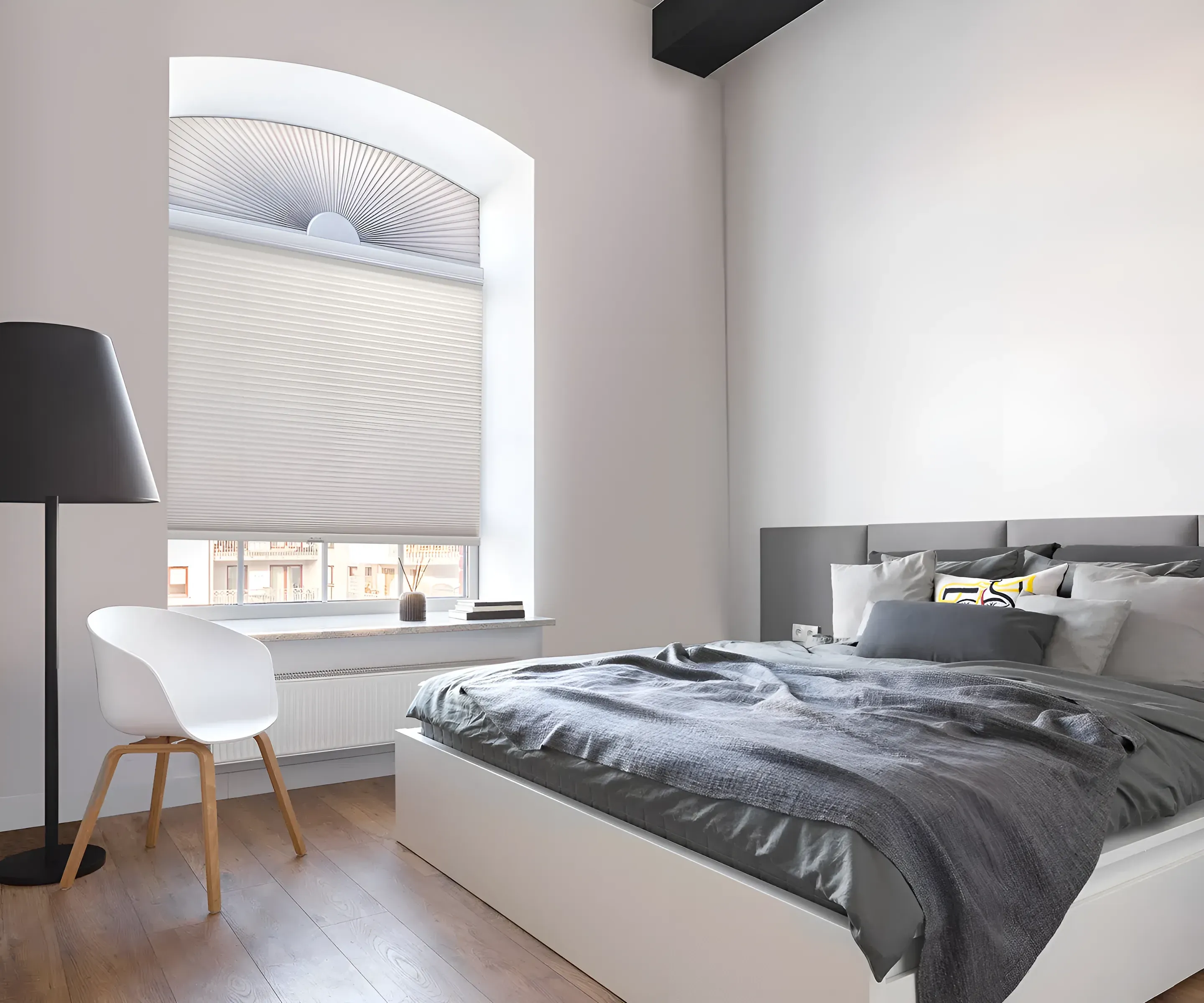
Portrait™ Honeycomb
Cellular shades for insulation, softer acoustics, cordless operation, room-darkening fabrics, and clean everyday privacy.
 © 2021 Norman®. All Rights Reserved.
Custom Shades
Shade selection starts with fabric, opacity, stack, lift system, room-darkening needs, insulation goals, and selected motorized options. Compare honeycomb, roller, Roman, sheer, drapery-like, and folding styles by room.
© 2021 Norman®. All Rights Reserved.Cellular shades for insulation, softer acoustics, cordless operation, room-darkening fabrics, and clean everyday privacy.
 © 2021 Norman®. All Rights Reserved.
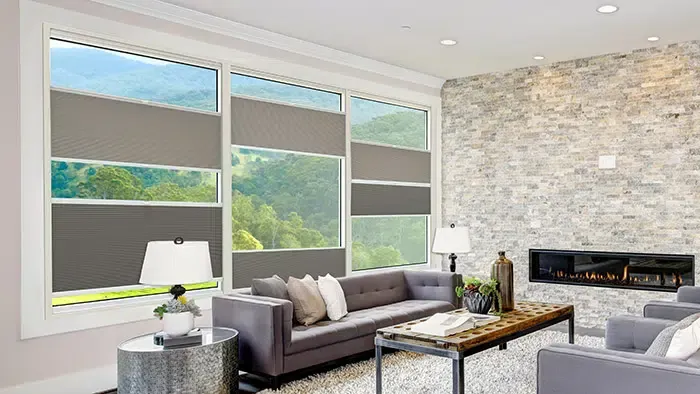
A framed honeycomb shade option for top-down, bottom-up control, slim stacking, and doors or specialty openings.
 © 2021 Norman®. All Rights Reserved.
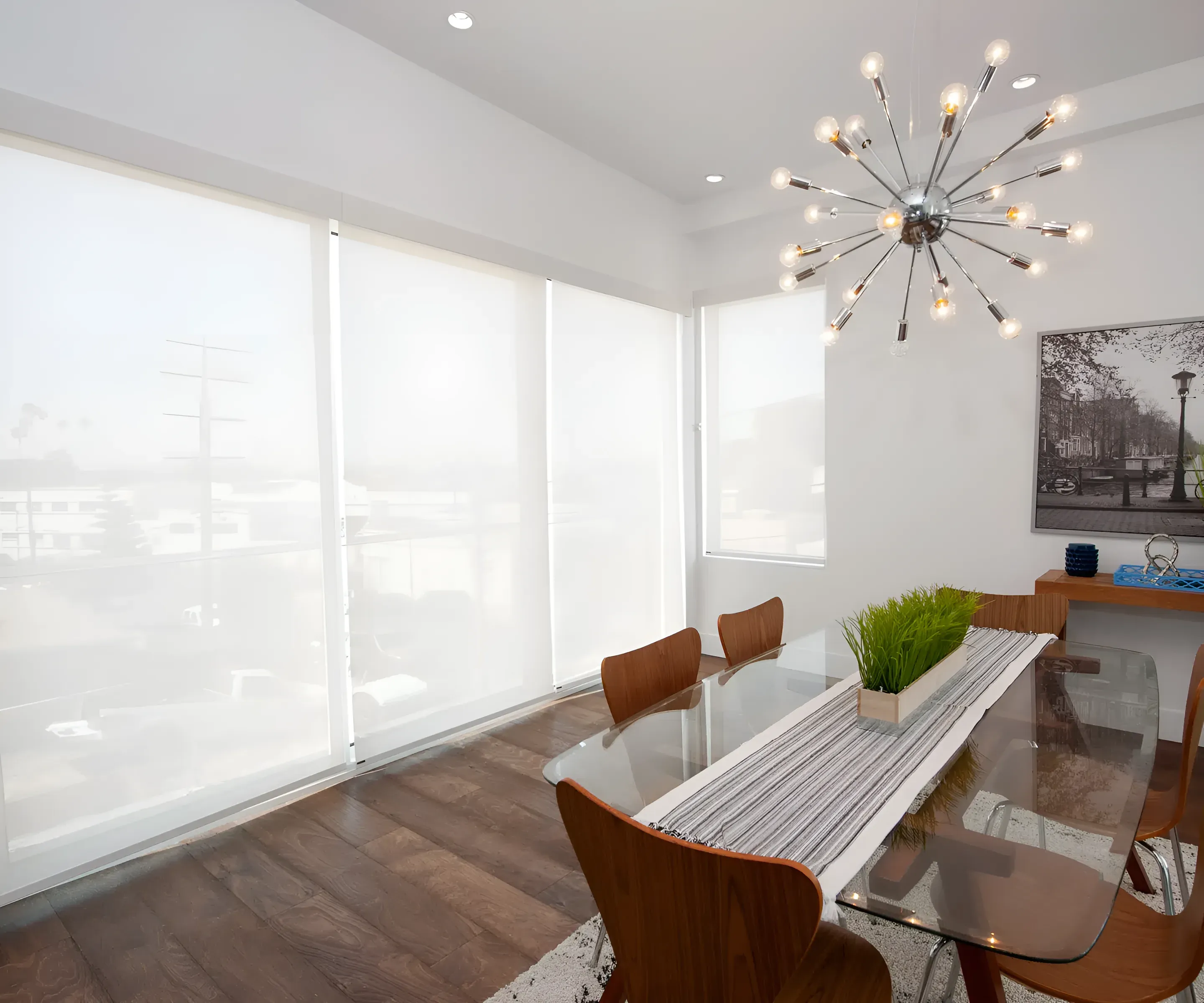
Sleek roller shades with fabric choices for light filtering, room darkening, solar control, cordless lift, and motorized operation.
 © 2021 Norman®. All Rights Reserved.
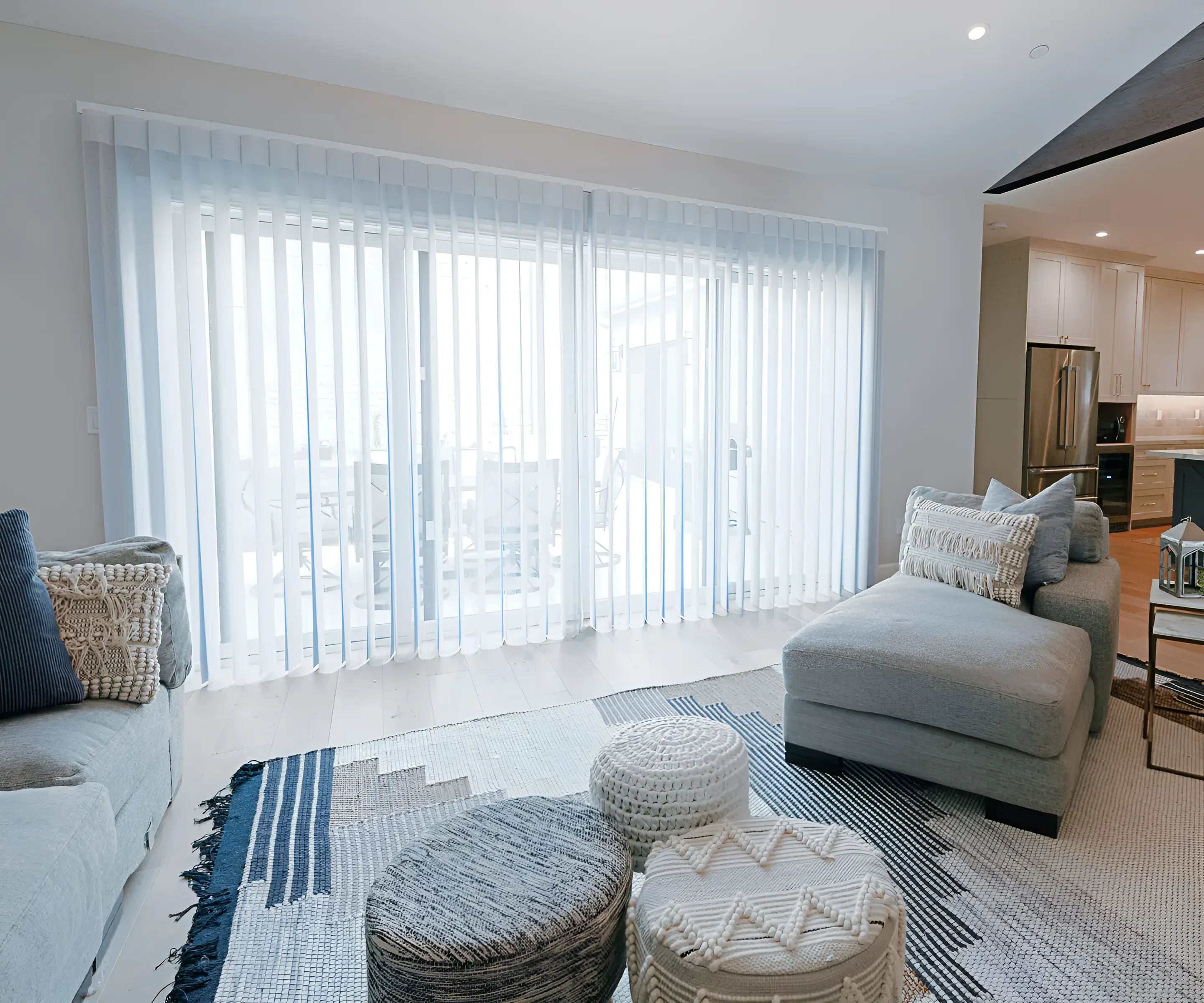
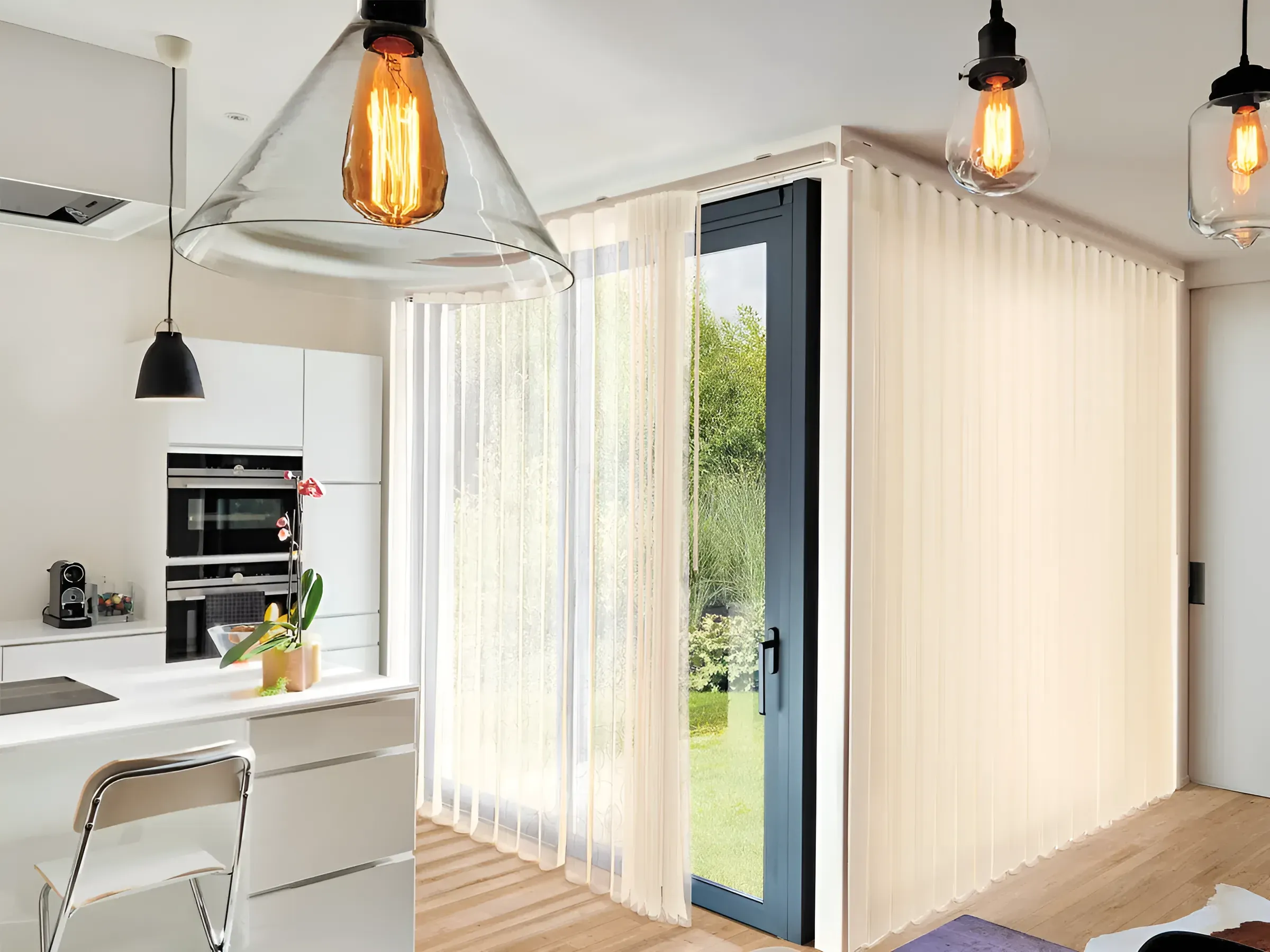
Drapery-like vertical fabric vanes for wide openings, patio doors, and rooms that need easier pass-through access.
 © 2021 Norman®. All Rights Reserved.
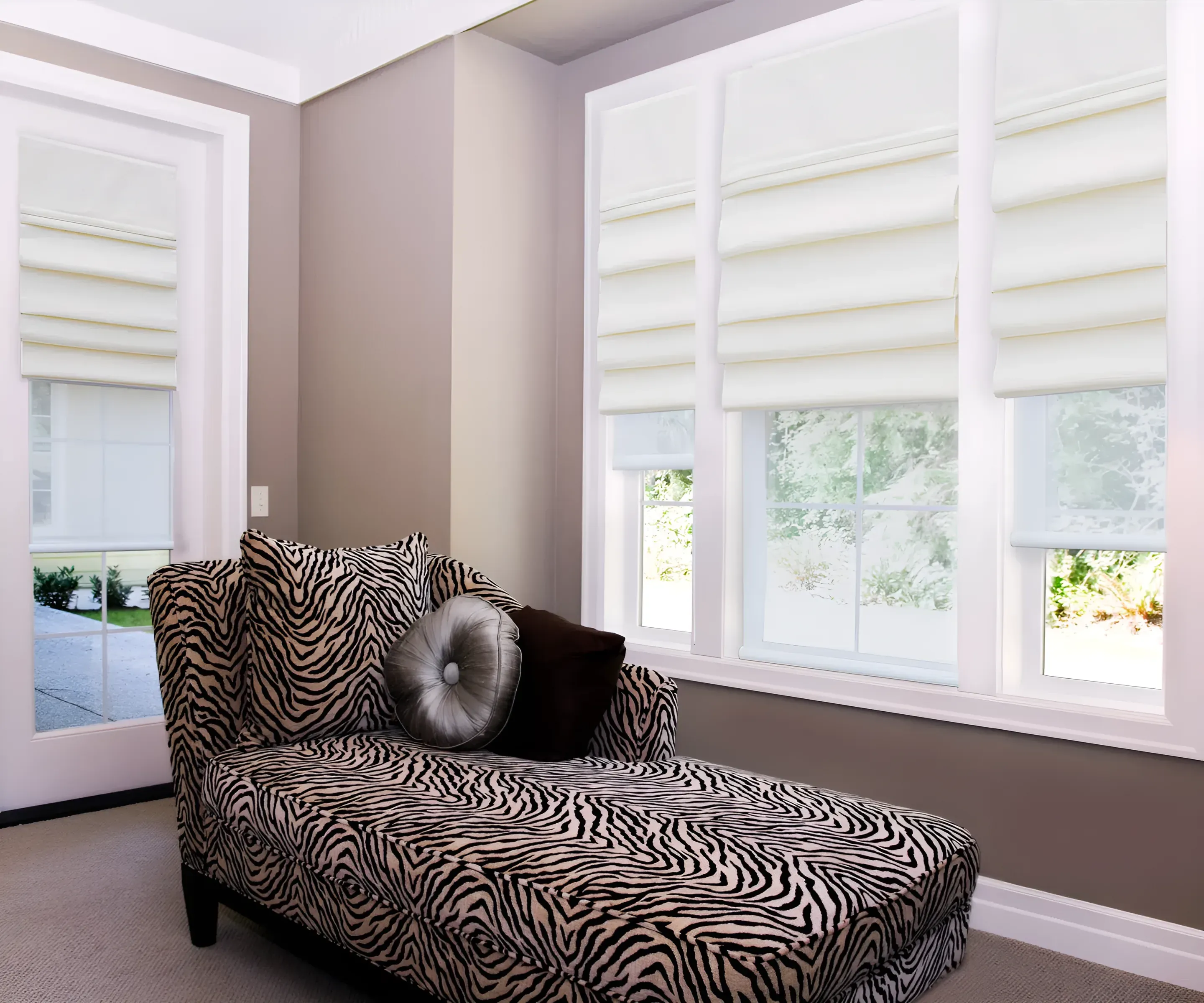
Tailored Roman shade styling with luxury fabric, classic folds, and modern lift options for a softer furnished look.
 © 2021 Norman®. All Rights Reserved.
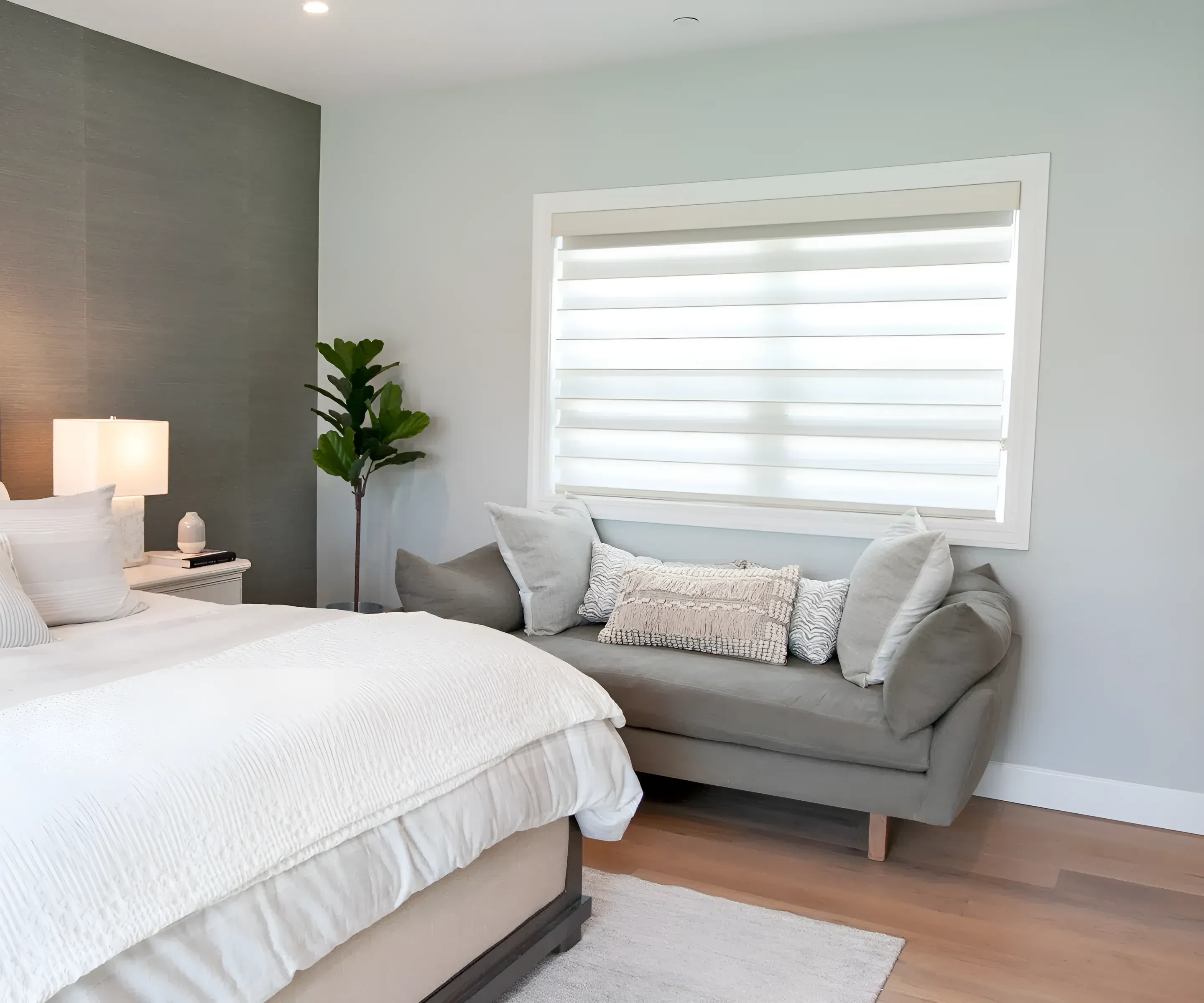
Layered sheer and fabric-vane styling for soft light transitions, privacy control, and a modern window finish.
 © 2021 Norman®. All Rights Reserved.
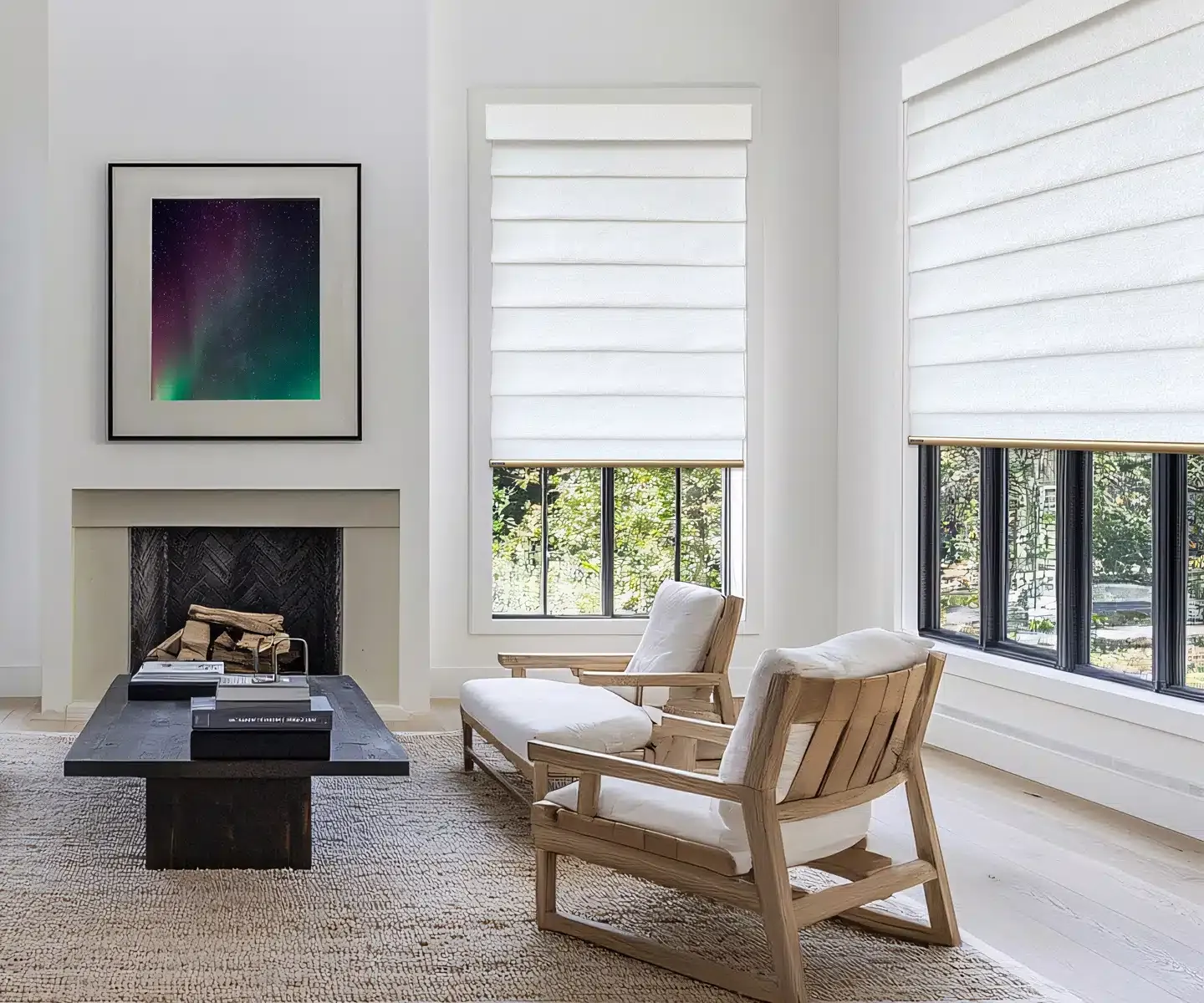
A folding fabric shade direction for broad expanses of glass, clean stacking, and a softer architectural look.
Honeycomb, roller, sheer, Roman, drapery-like, and folding shade styles each solve a different mix of privacy, softness, stack, and light control.
© 2021 Norman®. All Rights Reserved.A ready-made shade is cut for an average window. A custom shade is made for one opening, one room, and the light that comes through it. Choosing custom shades in Seattle starts with those conditions and only then moves to fabric, mount, and operation.
Most window problems here fall into four groups, and one well-chosen shade often solves two of them at once.
That is why good window shades in Seattle are selected for each window based on the room's requirements, the orientation of the glazing, and the frequency of interaction with the window throughout the day.
Cellular (honeycomb) shades trap still air in their cells, which makes them the first choice for cold bedrooms and drafty older windows. Cells come in six sizes from 3/8 to 1 1/4 inch, single or double; the double cell is meant for north walls, single-pane glass, and rooms that never warm up.
Roller shades are the cleanest option: one flat panel that rolls onto a slim tube or disappears into a cassette. On newer homes in Bellevue, Kirkland, and Redmond with shallow frames and drywall returns, an outside-mount cassette covers the opening neatly and hides the roll.
Solar shades are made from mesh fabric with varying degrees of transparency (ranging from 1% to 10%). A 5% transparency level is suitable for most living rooms, whereas fabrics with 1% or 3% transparency are better suited for workspaces or areas facing a television. Since these shades do not provide privacy at night when the lights are on, they are often paired with a dense, opaque fabric in bedrooms as part of a dual shade system.
Roman shades bring real fabric, from linen and cotton blends to silk, in flat or soft folds. A blackout lining turns the same shade into a bedroom shade, and polyester fabrics handle bathroom steam and wipe clean.
Sheer shades with fabric vanes tilt like a blind and soften a view window without closing the room. Top-down bottom-up shades lower from the top, so daylight comes in above while the lower half stays covered, the usual setting for bathrooms and street-level rooms. For sliding patio doors, vertical fabric vanes glide along a track, and you walk through them like drapes.
A room-darkening fabric stops light through the shade, but light still slips around it. An inside-mounted shade leaves a small gap on each side, and at dawn that gap becomes a bright line. Side channels along the frame close those gaps. For windows lacking deep reveals, mounting the fixture over the window opening - overlapping the casing - is an excellent solution, this approach often creates a neater, more polished look. If maintaining natural light is a priority, you can opt for dual shades or "day-night" cellular shades, which combine light-filtering and blackout fabrics on a single window. Blackout fabrics are available in white and light gray, as the material's opacity is determined by its inner layer rather than the visible surface color.
Each order of custom window shades in Seattle fixes:
Minor errors here remain noticeable for years: a cassette brushing against the window crank, a gap letting in light, or a housing obstructing the upper field of view.
Motorized shades earn their cost on tall windows, clerestory rows in great rooms, and walls with three or more shades. A five-channel remote allows you to control them without Wi-Fi, while the hub adds support for a mobile app, daily schedules, and voice assistants such as Siri, Alexa, or Google Assistant. Most motors run on a rechargeable battery, that lasts months, and a charging wand with an extension pole reaches windows up to about 11 feet high. A shade near an outlet can simply plug in, and a remodel with open walls is the moment to hardwire. A west-facing living room can lower its solar shades at 3 p.m. on its own, and a bedroom can close before you get home.
Our shade installation in Seattle follows the same path for one bathroom window or a whole house. It starts with a request through papablinds.com: tell us the rooms, which way the windows face, and which ones you cannot reach. During the visit, fabric samples - as well as examples of cell sizes and transparency levels - are held up against your window (ideally when sunlight is hitting it) so that you can evaluate them under actual lighting conditions.
Precise measurements are taken during this same visit. For each opening, we record the frame depth, reveal dimensions, installation clearances, and the placement of handles and charging ports, the final cost is calculated specifically for your windows rather than being drawn from a standard price list. On the day of installation, we level the mounting brackets, align and test the shades' operation, and pair the electric drives, before finishing up, we provide a brief tutorial on how to operate the lift and slat tilt functions, as well as how to use the app.
Want to see how each fabric behaves in your own light? Book a free in-home visit on papablinds.com and start with the windows that bother you most.
Double cells suit the coldest windows and bedrooms, because the second row of air pockets slows heat loss even more. They stack a little thicker when raised, so on a small window a single cell usually looks neater.
Roller and solar shades leave only a slim roll a few inches tall, and a cassette hides even that. Roman shades stack their folds at the top and cover part of the glass, so on a view window a roller is the better fit.
Darker screens are easier to see through and cut more glare, while lighter ones reflect more heat and brighten the room. For windows facing the lake or the mountains, charcoal and bronze are the usual picks.
See how fabric, opacity, privacy, and control options look in your actual light.
Norman® product names, marks, and photos are used for product education. ™ and ® denote trademarks owned or claimed by Norman®. Norman-supplied photos: © 2021 Norman®. All Rights Reserved.