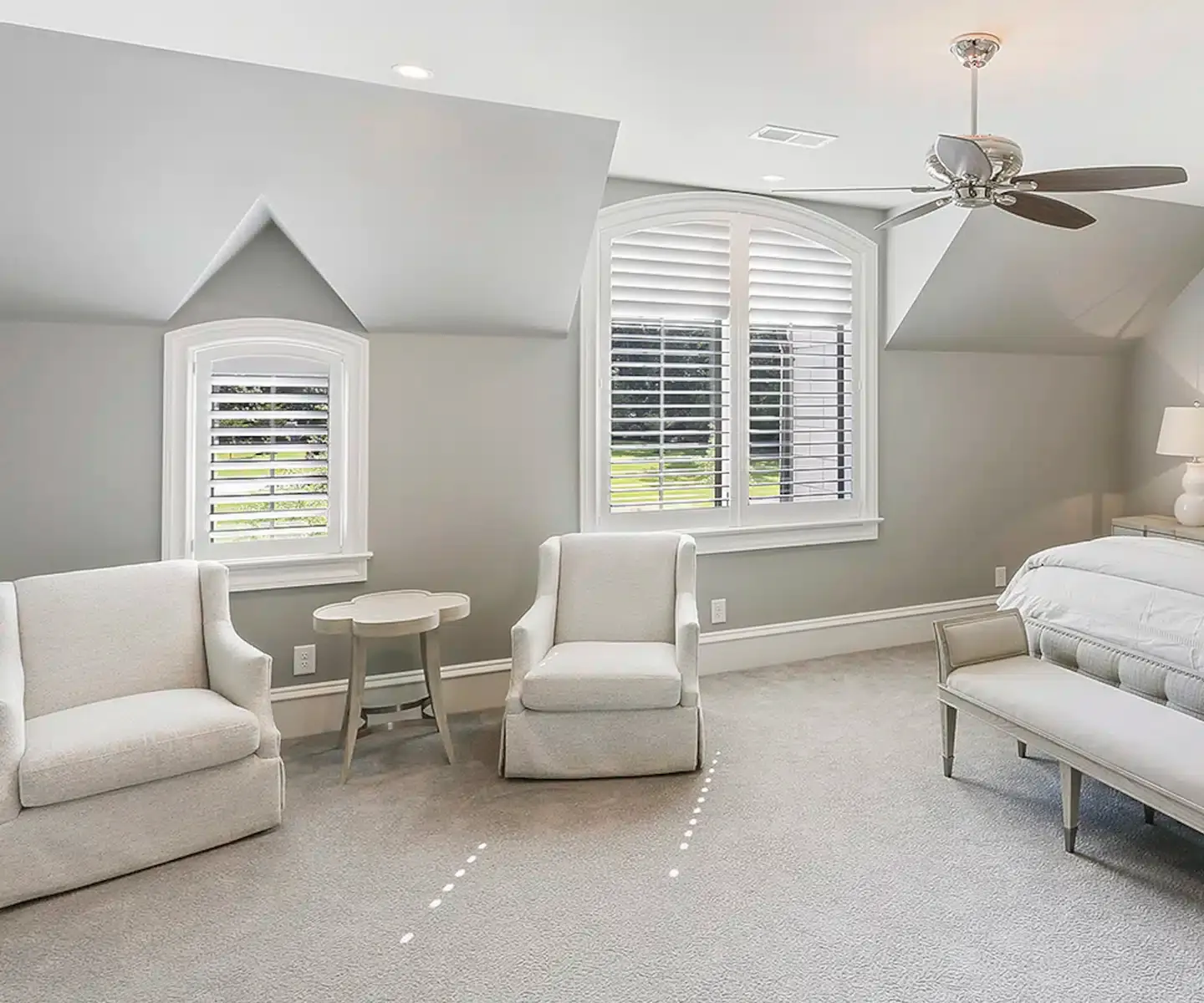
Wood shutters for Seattle homes: real hardwood, stained or painted to fit
A hardwood shutter is the one window covering that becomes part of the room's woodwork. Framed into the opening, it reads like trim or a piece of furniture, tilts for light and privacy, and stays with the house for decades. Choosing wood shutters in Seattle comes down to four questions: how the panel is built, which finish suits your floors and trim, which rooms can take real wood, and what the order involves from the first visit to installation. Here is how we answer each one.
What separates a good hardwood shutter from an average one
Two shutters can look identical in a showroom and age very differently on a Puget Sound window. When you compare hardwood shutters in Seattle , ask about four details: the species, the louver cut, the joinery, and the drying process. Those four details are why we install Normandy shutters in Seattle and across the Eastside.
Each Normandy panel is 100% solid, sustainably farmed Paulownia. This wood has one of the best strength-to-weight ratios among shutter species, so a wide panel stays light and its hinges stay true for years. The louvers are quarter-sawn, the cut that resists cupping and twisting as the air swings from a damp November to a dry August. Panels are joined with mortise-and-tenon joints, the method used in fine furniture, and the wood is conditioned before finishing to limit shrinking and swelling, so closed louvers meet without light gaps.
Stained or painted: choosing a finish in Northwest light
Stain shows the grain and makes the shutter read as furniture. Paint hides the grain and makes it read as trim. Our rule of thumb: in a room with hardwood floors and stained doors, stain, in a room with painted millwork, paint.
Normandy comes in over 50 standard stains and paints, from whites and honey tones to medium browns, walnut, espresso, grays and black, plus unlimited custom color matching. Most stained wood shutters in Seattle are matched to something already in the room: fir trim in an older Wallingford or Ballard house, oak or maple floors, or the stained doors of a newer Eastside build. Bring a floor plank or a drawer front to the visit and pick one element to match, matching floor, trim and furniture at once rarely works.
One local detail matters more than people expect. Our low winter light makes dark stains look darker on the window, than the sample in your hand, so we compare finishes on a gray day as well as a bright one before anything is ordered.
Where wood deserves its place, and where it doesn't
Most orders for wooden shutters in Seattle begin with the rooms guests see. In a living or dining room, a stained shutter on a wide window does what a good sideboard does. In an office or library, grain next to wood shelving reads as one design rather, than a white rectangle in a warm room. From the street, the shutters look neat and polished, while the independent slat adjustment feature allows the lower section to remain closed while the upper section lets in daylight. Where we steer you elsewhere: shower and tub windows, laundry rooms, and the window over the kitchen sink. Normal room humidity is fine for hardwood, direct water and steam are not. Those windows get waterproof or composite panels in a matching color.
Made to your windows: the options that shape the result
All specifications are determined right at the window, so measurements for custom wood shutters in Seattle are taken on-site.
- Louver size from 1 7/8 to 4 1/2 inches. Smaller louvers suit divided-light windows; larger ones open the view on tall glass.
- Frame. Z-frame, L-frame or direct mount, chosen by the depth of the reveal and the existing casing.
- Shapes. Arches, circles and angled tops are built to a template taken at the visit. A full hardwood arch keeps the woodwork consistent in the Tudor and revival houses of Queen Anne, Capitol Hill and Mount Baker.
- Doors. Bypass, bi-fold, or Bi-fold 180, which folds the panels flat against the wall beside a slider.
- Motorized tilt. PerfectTilt G4 runs on a battery, needs no wiring, and reaches clerestory and stairwell windows.
The classic look of wood plantation shutters in Seattle Craftsman houses comes from these proportions more than from color: louver width, frame depth, and where the divider rail falls against the sash.
From first visit to installation
The in-home visit is free. We bring stain and paint samples directly to you so you can evaluate them in your home's lighting, and we personally take measurements for every window - accounting for recess depth, casing details, handle placement, and the way the sashes open. You receive a written cost estimate for each window that includes both measurement and installation. The price depends on factors such as the number and size of windows, slat width, frame style, custom colors, and non-standard shapes, as well as optional features - such as the DayNite system or motorized tilt control.


 © 2021 Norman®. All Rights Reserved.