

West-facing walls of glass
The lake or the Sound is why the window is there. A 5% screen keeps it in view and takes the glare out.
Solar Shades
A solar shade is a roller shade in a woven screen fabric. Lowered, it takes the glare and much of the heat out of a west-facing window while you still see the yard, the lake, or the street. Soluna™ solar fabrics from 1% to 10% openness, installed by PAPABLINDS in Seattle, Bellevue, Kirkland, and Redmond.
Openness is the share of the weave that is open. Lower numbers block more glare and heat and show less view; higher numbers do the opposite.
| Openness | Glare and heat | View through | Typical use |
|---|---|---|---|
| 1% | Most blocked | Faint | Screens and TVs facing the window, west sun |
| 3% | Strong | Soft | Living rooms and offices with afternoon sun |
| 5% | Good | Clear | The middle choice for most rooms |
| 7% | Moderate | Clearer | Rooms where the view matters more |
| 10% | Light | Clearest | Shaded sides of the house, view windows |
None of them gives privacy at night with the lights on. For that, pair the screen with a room-darkening fabric in a dual shade.
The complaint here is rarely heat. It is glare: a low sun in October at 4 p.m. that comes straight through a west window and onto the television, the monitor, or the dining table. A solar screen takes that edge off without turning the room dark, which a room-darkening shade would.
On the hot days we do get, a screen on the outside-facing windows keeps the afternoon heat down in rooms without air conditioning, which is most Seattle-area homes built before the last few years.
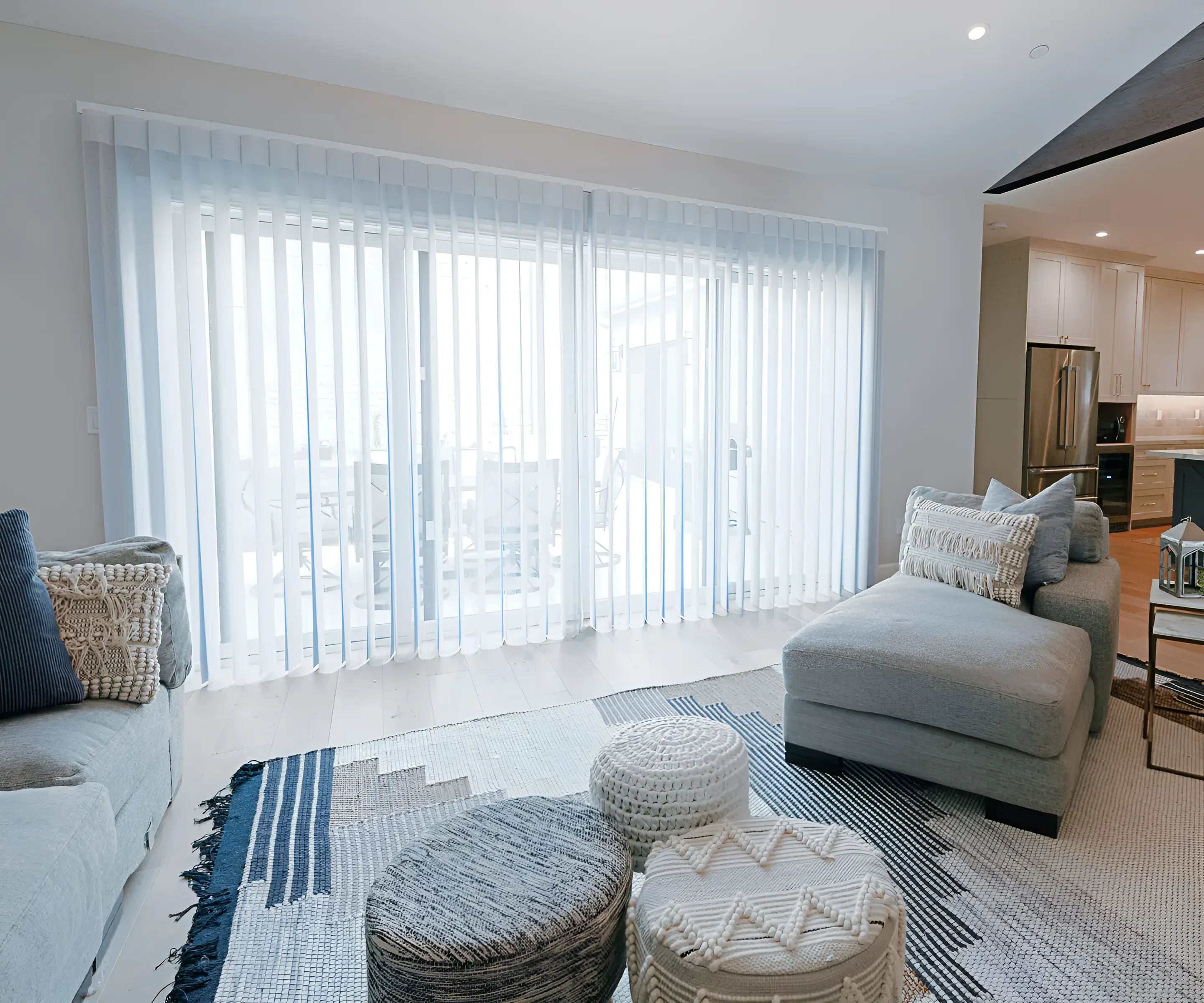 © 2021 Norman®. All Rights Reserved.
The lake or the Sound is why the window is there. A 5% screen keeps it in view and takes the glare out.
A 1% or 3% screen behind the desk ends the afternoon squint without closing the room.
A screen fabric wipes clean and does not mind steam, and the window stays a window.
Coupled solar shades on one line cover a run of windows and lift together.
For a screen or a TV facing the window, 1% or 3%. For a living room where the view matters, 5%. For the shaded side of the house or a pure view window, 7% or 10%. We bring the sample swatches and hold them up against the actual sun at the visit.
Darker screens see through better and cut glare more; lighter screens reflect more heat and brighten the room. Charcoal and bronze are the usual choice for view windows.
Yes, with the lights on. A solar screen is a view-through fabric in both directions. For a bedroom or a ground-floor window, add a room-darkening fabric as a dual shade.
Inside. These are interior roller shades; the screen fabric is the same idea as an exterior sun screen, mounted where it stays clean and dry.
Solar shades are roller shades in a woven screen fabric. They were designed for hot climates, but the reason people in Seattle, Bellevue, Kirkland, and Redmond ask for them is glare: the low autumn and winter sun that comes straight through a west window onto a screen or a table. A Soluna™ solar shade cuts that glare and much of the heat while the view stays. PAPABLINDS measures and installs them across the Greater Seattle Area.
The fabric is a weave, and openness is the share of it that is open. A 1% fabric blocks the most light and shows a faint view; a 10% fabric shows the clearest view and blocks the least. Most living rooms land at 5%; home offices and media rooms at 1% or 3%; view windows facing the water at 7% or 10%.
A screen is see-through in both directions. By day the outside is brighter, so the room is hidden; at night with the lights on, the reverse. For a window that needs privacy at night, we pair the screen with a room-darkening or light-filtering fabric in a dual shade, or we put a solar shade on the view window and a different shade on the bedroom.
A wall of west-facing glass usually means three or more shades, and that is where motorization earns its cost: one button at 3 p.m., or a schedule that lowers the shades before the sun swings around. Power and charging are confirmed at the visit.
Request a free in-home visit in the afternoon, when the sun is on the window, and we hold the openness samples against it.
Norman® product names, marks, and photos are used for product education. ™ and ® denote trademarks owned or claimed by Norman®. Norman-supplied photos: © 2021 Norman®. All Rights Reserved.